

Choosing impact windows and doors is not simply choosing a brand, a frame color or the thickest-looking glass. The important comparison is between documented products that are suitable for the specific openings and a clearly defined installation scope. A showroom description cannot establish suitability for every South Florida property.
Start with the building and work toward the product. Exact model, size, glazing and configuration matter, as do the existing wall conditions and installation details. This approach gives owners a practical way to ask better questions without treating marketing language as technical approval.
Begin with an opening-by-opening inventory
List the windows, entry doors and sliding doors you are considering, room by room. Note how each operates, whether it is paired with fixed panels or a transom, and what you want to improve. Keep a distinction between a replacement in an existing opening and a change to the opening itself; they can involve different work.
Provide accessible photographs and existing drawings if available, but leave ordering measurements to the project team. Field measurements need to account for actual conditions, not just visible glass. Identify interior furniture, exterior landscaping and occupied rooms that affect access before a proposal is finalized.
Ask before you decideDoes the quote identify every opening and its proposed configuration?
Verify the exact product—not just the brand
A product line can contain multiple models and configurations. Approval documentation should be matched to the exact model, size range, glazing specification and assembly being proposed. Ask for the relevant approval identification and supporting documents rather than a general brochure or a statement that the manufacturer makes impact products.
Florida's official Product Approval search allows searches by FL number and other criteria. It is a useful starting point for locating documentation, not a do-it-yourself determination that a product is suitable for your building. The project team and permitting authority must verify the applicable documentation and site requirements.
Check that the proposed combination is represented in the documents: a window approval does not automatically cover a door, and one glazing option does not establish approval for every option. Ask how any product substitution will be reviewed before ordering, including changes to size or configuration.
Ask before you decideWhich approval documents correspond to the exact assembly in my quote?
Connect frame, glass and hardware choices
Frame finish, glass appearance and hardware are practical choices as well as visual ones. Consider how daylight, privacy, cleaning access and everyday operation affect the rooms involved. Compare the actual proposed specifications rather than assuming all options in the same product family perform identically.
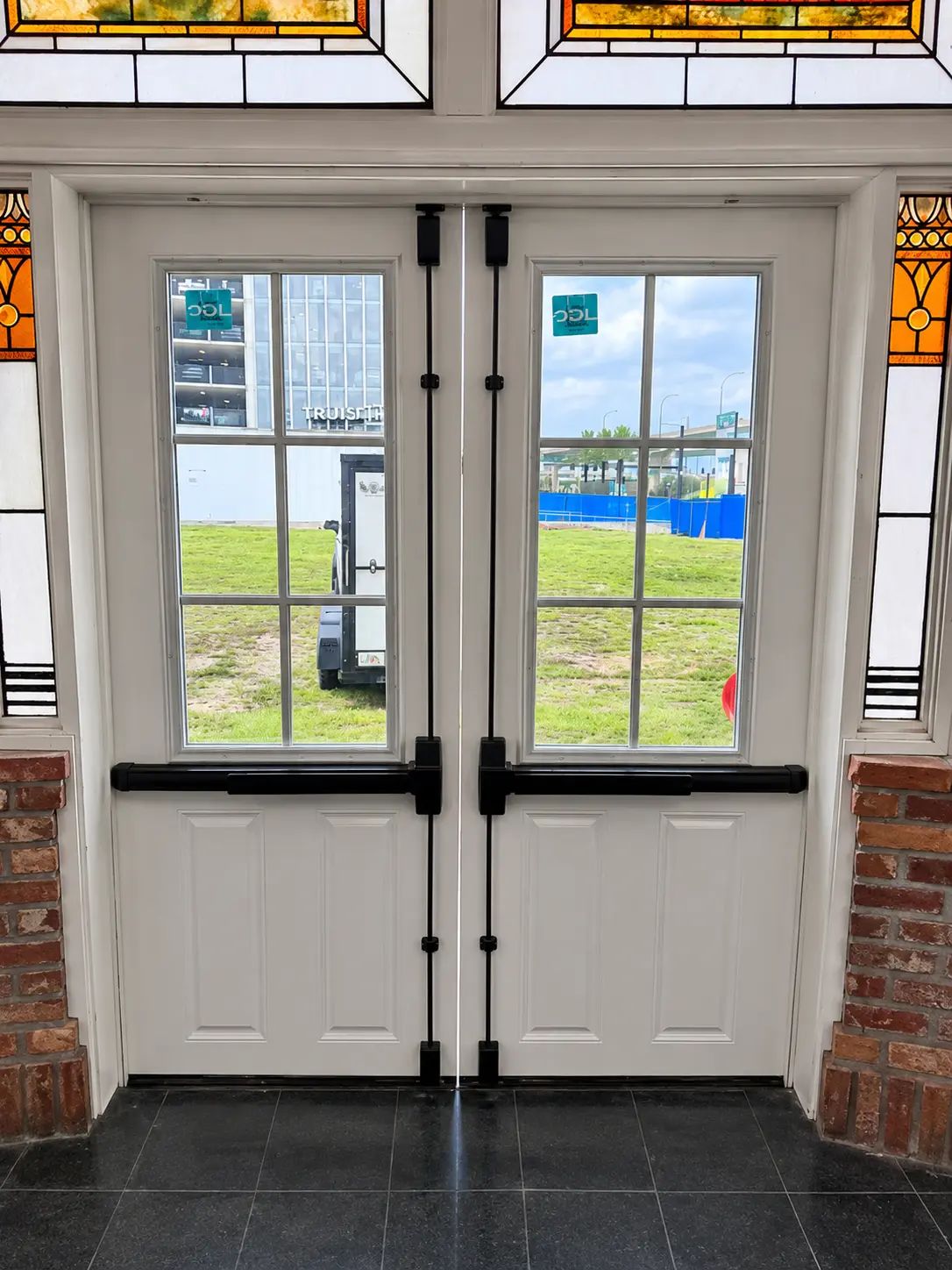
For doors, clarify swing or sliding configuration, locks, handles, closers where applicable, and how the entrance is used. Review samples and written selections before an order is released. A photograph of attractive glazed doors—including the client photo on this page—does not establish impact certification or the product approval for your project.
Treat installation as part of the selection
An approved product still needs an installation suited to the opening and its supporting construction. Ask how attachment, sealing and surrounding conditions will be addressed in the documented scope. Existing wall damage, deteriorated substrates or earlier modifications may require additional evaluation rather than being concealed by new trim.
Clarify removal and disposal, protection of interior surfaces, exterior patching, trim, painting and cleanup. Identify what is included and what remains the owner's responsibility. If removal reveals unexpected conditions, agree on how they will be photographed, explained and authorized before additional work begins.
Ask before you decideWhat happens if the existing opening needs work before the new unit can be installed?
Plan approvals and inspections before ordering
Confirm the permitting authority responsible for the address and the documents needed for the proposed work. Alfa Pacífica coordinates municipal permitting and building inspections, plus written HOA approval where required. Association approval and building permits are separate processes; one should not be assumed to replace the other.
Discuss the sequence between final specifications, approvals, procurement, installation and inspections. Requirements and timing depend on the property, products and reviewing authority. Avoid treating a generic installation schedule as a guaranteed permit or delivery timeline, especially when multiple openings or occupied commercial spaces are involved.
Compare a complete scope, not a promise
A useful proposal identifies products, opening locations, installation responsibilities, finishes, exclusions and warranty information. Ask what documentation you receive at handover and how future product or workmanship concerns are reported. Preserve the approval references and selection record with your property documents.
Impact-rated products should not be described as universally hurricane-proof. Do not assume an insurance discount, a particular wind-speed rating or approval for every building from marketing language. Any insurance question belongs with your insurer, and technical suitability belongs with the documented project review. The objective is an informed selection, not a false assurance.
Official references
- Florida Building Code Online — Product Approval Search
Official state search by FL number, manufacturer and other criteria; the applicable product documentation and project conditions still require review.
General planning information, not legal, engineering or code advice. Requirements depend on the property and jurisdiction; confirm applicable documentation with the project team and permitting authority.
Discuss the scope for your property.
Start with your address, project priorities and the questions you want answered.